
 Mitolux Sunlamp Review: Vitamin D, Red Light & Recovery
 Mitolux Sunlamp Review: Vitamin D, Red Light & Recovery
The Mitolux Sunlamp is a compact, at‑home “better sunlight” device that combines narrowband UVB with red and near‑infrared light to support vitamin D, skin, recovery, and mood in a controlled way.
Problem and who it is for
Many people spend most of the day indoors, in front of screens, under lighting that does almost nothing for vitamin D, circadian rhythm, or skin health. Even in sunny climates, work schedules, heat, and skin‑cancer concerns mean minimal mid‑day sun exposure, which can affect vitamin D status, mood, and how skin and muscles feel over time.
The Mitolux Sunlamp is designed for people who:
Want a reliable, year‑round way to stimulate natural vitamin D production with UVB, while also getting the recovery and skin benefits of red/NIR light.
Care about healthspan, training, and energy, but prefer a structured, time‑efficient protocol over long sunbathing sessions or guesswork with supplements.
It is not intended as a medical treatment for deficiency or disease, and it is not a replacement for clinical management of bone, immune, or hormonal issues.
How it works (simple mechanism)
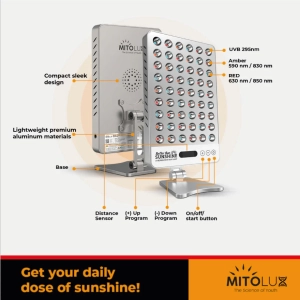
The Mitolux Sunlamp emits three key parts of the light spectrum: narrowband UVB around 295 nm, red/amber around 590–630 nm, and multiple near‑infrared wavelengths (810, 830, 850, 940 nm). Together, these approximate the “health‑relevant” slice of sunlight—enough to trigger skin and mitochondrial responses, while intentionally excluding wrinkle‑promoting UVA.
UVB (≈295 nm): When UVB hits skin, it converts 7‑dehydrocholesterol into pre‑vitamin D3, which the body then processes into active vitamin D over hours. This is the same basic pathway sunlight uses, but here the dose and timing are tightly constrained, with built‑in programs and safety sensors to limit exposure.
Red (590, 630 nm) and NIR (810–940 nm): These wavelengths support photobiomodulation—boosting mitochondrial function, blood flow, and repair signaling in skin, muscle, and connective tissue. In practice, that can feel like better skin texture, less soreness, and more comfortable joints, especially when used consistently and combined with good recovery habits.
For you, this means the Mitolux Sunlamp may give you a short, structured window each day where you get: a measured UVB “vitamin D stimulus,” red‑light skin and recovery support, and NIR‑driven deep tissue signaling, without committing to long outdoor sessions or relying solely on supplements.
Theory of efficacy
What the Mitolux Sunlamp directly does
Delivers narrowband UVB to small body areas to support the skin’s own vitamin D production.
Provides focused red and near‑infrared light for photobiomodulation, targeting mitochondria in skin and underlying tissues.
Offers preset programs (Naturalight, RED/NIR, fireplace/candlelight modes) that sequence these wavelengths in a way that mimics aspects of natural daylight and evening light.
What this may change in the body
UVB exposure can increase cutaneous vitamin D synthesis, which in turn supports bone health, immune function, and aspects of hormonal regulation when overall lifestyle and diet are reasonable.
Red and NIR light can increase mitochondrial ATP production, improve microcirculation, and modulate inflammatory signaling in skin, muscles, and joints.
Evening “fireplace” modes create a low‑blue, red‑dominant light environment, which may help offset heavy screen exposure and support more natural melatonin rhythms.
How that could translate into felt benefits
For a typical user—already paying attention to sleep, nutrition, and training—the Mitolux Sunlamp may help with:
Feeling more resilient through the week: less “under‑recovered,” especially in muscles or joints exposed to the light regularly.
Skin that looks a bit smoother, more even‑toned, and less dull over a period of weeks to months of red/NIR use.
A more stable vitamin D status across seasons, under clinician guidance and testing where appropriate, with the psychological benefit of a brief “sun ritual” in winter or indoor‑heavy weeks.
These are all incremental effects. Real gains depend on consistent, correct use plus sensible training, diet, and medical follow‑up—not on the lamp alone.
Evidence and expectations
What has stronger human or device‑specific support
UVB and vitamin D: Narrowband UVB around 295 nm is well‑established for stimulating vitamin D synthesis in skin; Mitolux applies that principle with LED instead of older fluorescent tech.
Red/NIR photobiomodulation: Red and near‑infrared wavelengths like 630, 830, and 850 nm have human data for skin rejuvenation, wound healing, and some pain/recovery contexts, though results vary.
Practical timeframes: Mitolux’s own guidance and reviews suggest 15 seconds to a few minutes per day can be enough to produce significant UVB‑driven vitamin D in lighter skin types, and red‑light users often track skin or recovery changes over 8–12 weeks.
Promising but early or indirect
Using one device for “full‑spectrum wellness”: Combining UVB, red, and multiple NIR bands into one small form factor is a clever engineering solution, but there are limited head‑to‑head trials comparing this exact configuration to outdoor sun or separate devices.
Blue‑light “neutralization” modes: Fireplace/candlelight modes are grounded in circadian logic (less blue at night), but the exact impact on sleep and health, with this specific device, remains more theoretical and user‑reported than rigorously trialed.
Unknown or speculative
Direct, quantified healthspan extension, major hormone “optimization,” or disease prevention specifically attributable to the Mitolux Sunlamp remain speculative.
Long‑term safety for very high cumulative UVB doses outside recommended use is not fully characterized, and regulators in some markets have raised concerns with unlicensed UV devices if used improperly.
Realistic expectations and timelines
Vitamin D: Expect to evaluate vitamin D status with blood tests over 8–12 weeks of consistent use, coordinated with your clinician, and adjust exposure accordingly.
Skin and recovery: Look for changes in skin texture and mild pain or soreness over 6–12 weeks; track with photos and training logs rather than relying solely on memory.
Mood and energy: Some users may feel a subjective “lift” within days to weeks, especially in darker months, but this is variable and should not be used as a stand‑alone solution for mood disorders.
Usage protocol (non‑medical)
This is a general wellness‑oriented framework, not medical advice. Always follow Mitolux’s instructions and local regulations.
Getting started (weeks 1–3)
1. Choose your main goal
Vitamin D support + general light hygiene.
Skin and recovery emphasis.
Evening light hygiene for screen‑heavy days.
2. For vitamin D / Naturalight mode
Start with very short exposures (e.g., 10–15 seconds per side) on a small skin area (e.g., forearms, lower legs, or torso), 3–4 times per week.
Increase by 5–10 seconds per session as tolerated, watching for redness or irritation; many users sit in the 30–120 second range depending on skin type.
Use ideally earlier in the day to align with natural solar timing and avoid UV right before bed.
3. For red/NIR skin and recovery
Use the RED/NIR or similar program without UVB if you want a red light therapy‑only session.
Distance: Follow the device manual; usually close range (e.g., 15–30 cm).
Duration: 5–10 minutes per target area, 3–5 times per week, for 8–12 weeks before judging results.
4. For evening / fireplace modes
Use Fireplace/Candlelight modes in the last 1–2 hours before bed as your main ambient light, especially if you’re using screens.
There is no UVB in these modes; think of them as “circadian‑friendly” light rather than therapy doses.
Ongoing routine (after ~4 weeks)
Lock in a consistent schedule you can maintain: for example, Naturalight on training or work days, RED/NIR after strength sessions or for specific joints/skin areas, and fireplace mode most evenings.
Reassess after ~12 weeks with: vitamin D labs (if that’s your goal), skin photos, a simple pain/recovery rating, and sleep quality notes.
Adjust exposure time modestly rather than making big jumps; more UVB is not always better and carries additional risk.
Safety and who should be cautious
Mitolux uses narrowband UVB LEDs and builds in safety features (distance sensors, UVB indicator LED, programs), but UV and intense light still require respect. This product should be used cautiously, especially in higher‑risk groups.
People who should speak with a clinician before use include:
History of skin cancer, pre‑cancerous lesions, or very high skin‑cancer risk: UVB exposure, even narrowband, can add to cumulative UV load.
Photosensitive conditions or medications: Autoimmune photosensitivity, genetic photosensitivity, or drugs that increase UV/light sensitivity (some antibiotics, acne medications, etc.).
Very fair skin (Type I) or a history of severe burns: These individuals may require extremely low UVB doses or may be advised against use.
Eye issues: UV and strong light can be hazardous to the retina; protective eyewear and careful positioning are essential, and people with eye disease should get medical advice.
Pregnancy or serious chronic illness: Data for targeted UVB devices in pregnancy and complex disease are limited; involve your healthcare team.
General precautions:
Use the included or recommended eye protection during any UVB session.
Strictly avoid looking directly into the LEDs, especially when UVB is active.
Do not exceed manufacturer‑recommended session times or frequencies.
Monitor skin carefully for unusual changes and stop use and seek evaluation if you notice concerning lesions or reactions.
This device is not a substitute for medical evaluation, diagnosis, or treatment of vitamin D deficiency, bone disease, mood disorders, or any other condition.
Plain-language recap and buying guidance
Best for people who… want a compact, structured way to combine vitamin D–stimulating UVB with red light therapy and NIR for skin, recovery, and light environment, and who will use it consistently and cautiously.
Not ideal for people who… have a history of skin cancer, strong UV sensitivity, significant eye disease, or are unwilling to follow short, precise exposure protocols and coordinate with their clinician.
To get the most value, combine with… regular strength and aerobic training, nutrient‑dense food (including vitamin D and calcium per clinician guidance), good sleep habits, and routine bloodwork and skin checks as appropriate.
Think of the Mitolux Sunlamp as… a high‑control, “engineered sunlight slice” that can complement—not replace—outdoor light and medical care for people serious about performance, recovery, and long‑term health.

