
Red Light Therapy (Photobiomodulation): Mechanism, Benefits, Protocols, and Safety
Problem and who it is for
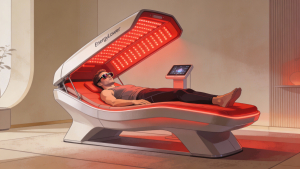 Many people don’t feel “sick,” but they do feel under‑recovered: workouts leave them sore for days, joints feel creaky in the morning, skin looks dull or more lined, and small injuries seem to linger. Red light therapy is aimed at this day‑to‑day recovery gap, not at curing disease, by nudging how cells produce energy and handle inflammation in skin, muscles, and connective tissues.
This modality is most relevant for health‑conscious people who are already working on sleep, nutrition, and exercise, and who want a non‑invasive, low‑effort way to support skin appearance, muscle recovery, and comfort as they age. It is not a shortcut for poor lifestyle habits and not a stand‑alone treatment for medical conditions that require diagnosis and management by a clinician.
How red light therapy works
Red light therapy uses low‑level red and near‑infrared light, typically in the 600–900 nanometer range, delivered by LEDs or lasers at intensities that signal cells without heating or damaging tissue. These wavelengths penetrate a few millimeters into the skin, and near‑infrared can reach deeper structures like fascia and superficial muscle, depending on dose and device design.
At the cellular level, a key target is the mitochondrial enzyme cytochrome c oxidase, which helps drive ATP production, the basic “energy currency” of the cell. When these enzymes absorb red and near‑infrared photons, they can increase mitochondrial membrane potential and ATP output, modulate nitric oxide, and adjust reactive oxygen species in a way that supports controlled inflammation and repair rather than chronic irritation.
For you, this mechanism means that consistent red light therapy may help cells in skin, muscle, and other tissues do energy‑intensive work—like collagen synthesis, cleanup of cellular debris, and tissue remodeling—more efficiently, which can show up as smoother skin, less soreness, and faster bounce‑back from everyday physical stress.
Theory of efficacy
The direct action of red light therapy is simple: it delivers specific wavelengths of red and near‑infrared light to a body region for a limited time, usually minutes. Properly calibrated devices are designed to deliver enough energy (measured in mW/cm² and total dose) to trigger photobiomodulation while remaining non‑thermal and non‑damaging.
In response to this light, cells can increase ATP production, modulate inflammatory pathways, and upregulate genes related to collagen production, antioxidant defenses, and tissue repair. In skin, red light therapy benefits may include improved collagen density, better microcirculation, and changes in oil glands, while in muscles and joints, it may shift inflammatory mediators and local blood flow in ways that support recovery and comfort.
If those cellular and tissue‑level changes occur repeatedly over weeks, they may translate into felt benefits such as:
Smoother, more elastic skin and reduced fine lines or redness.
Less post‑exercise soreness and modestly faster recovery.
Improved comfort in overworked or mildly arthritic joints.
Better tolerance for frequent training or active daily life without feeling “beat up.”
These outcomes depend heavily on dose, consistency, and the backdrop of sleep, nutrition, and medical care, so red light therapy is best viewed as an adjunctive tool rather than a primary treatment.
Evidence and expectations
Where evidence is stronger
Skin aging and rejuvenation: Controlled trials of LED photobiomodulation show improvements in wrinkle depth, skin roughness, and collagen density after a series of red light therapy sessions, often 2–3 times per week over several weeks. People typically notice changes over 8–12 weeks, not overnight.
Wound and tissue healing (adjunctive): Experimental and early clinical work suggests that red light can speed cutaneous wound closure and modulate inflammation, though protocols are still being refined.
Some pain and inflammatory issues: Reviews note low‑to‑moderate quality evidence that red light therapy can reduce certain kinds of pain (e.g., tendinopathy, musculoskeletal pain) and inflammation, particularly when used alongside standard care.
Promising but early or mixed
Exercise recovery and performance: Some studies show reduced markers of muscle damage and less soreness when red light therapy is used before or after intense exercise, but results are mixed and often small‑sample.
Hair and scalp: Devices using specific red/NIR protocols have shown increased hair density in androgenetic alopecia, though responses vary.
Cognition and mood: Small studies suggest brain‑targeted photobiomodulation may help with cognition and mood in certain contexts, but evidence is preliminary and not disease‑curative.
Unknown or speculative
Systemic “anti‑aging” or healthspan extension: While red light therapy may support individual tissues, robust human data showing broad extension of healthspan or reversal of aging are lacking.
Stand‑alone treatment for complex diseases: For conditions like advanced osteoarthritis, neurological disease, or autoimmune disorders, red light may at best be a supportive adjunct; it has not been shown to reverse advanced pathology.
Realistic expectations
Skin: Evaluate over at least 8–12 weeks using consistent photos and lighting.
Soreness and recovery: Some notice changes within 2–4 weeks; others see little difference even with correct use.
Pain and joint comfort: Expect subtle changes over weeks, not dramatic, immediate relief, and always in the context of broader management.
From a resource standpoint, red light therapy sits behind high‑yield basics like strength training, cardio, nutrition, and sleep, but can be reasonable as a “second‑line” recovery or skin‑support investment for people with those foundations mostly in place.
Usage protocol (non‑medical)
This is a general wellness‑oriented red light therapy protocol, not medical advice. Always follow your device’s manual.
Getting started (first 4 weeks)
Frequency: 3–4 sessions per week for each target area (e.g., face, neck, knees, low back, or a main muscle group).
Session length:
Small panel or handheld: 5–10 minutes per area.
Larger panel / body device: often 10–15 minutes per side, depending on power density.
Distance from device: Typically 15–30 cm from the LEDs for consumer panels; closer ranges for low‑power handhelds if specified.
Timing: Use at a time you can stick with consistently (morning or early evening are common). Avoid bright light in the eyes late at night, which may interfere with sleep in some people.
Ongoing routine (after 4+ weeks)
Maintain red light therapy 3–5 times per week for ongoing skin and recovery goals, adjusting session length slightly based on tolerance and perceived benefit.
For exercise recovery, apply red light therapy to the main muscle groups or joints either shortly before training or within a few hours after, 5–10 minutes per area.
Respect the “biphasic dose” idea: more is not always better; very long or very frequent sessions can reduce effectiveness.
Reassess every 8–12 weeks with objective anchors: before/after photos for skin, training logs and soreness ratings for recovery, and pain scales for joints.
Avoid intentionally staring into LEDs or using facial devices without appropriate eye protection unless they’re specifically designed for safe peri‑ocular use and instructions say eye shields are not needed.
Safety and who should be cautious
Most consumer‑grade red light therapy devices, when used as directed, are considered low risk, with side effects generally limited to temporary skin warmth, redness, or mild eye strain if you look directly at the light. Still, there are important caveats:
Photosensitivity: People with photosensitive conditions or on photosensitizing medications (certain antibiotics, acne drugs, or supplements) should speak with a clinician before starting.
Active cancer or suspicious lesions: Because photobiomodulation stimulates cellular activity, many guidelines recommend avoiding direct use over known or suspected cancers unless it is part of an oncology‑supervised protocol.
Pregnancy: Avoid direct red light therapy over the abdomen or low back during pregnancy unless cleared by an obstetric provider, as long‑term safety data are limited.
Seizure disorders: Light exposure can, in some contexts, trigger seizures in susceptible individuals, so those with epilepsy or similar histories should seek medical input first.
Eyes: Use eye protection for facial or head treatments unless the device is explicitly designed for peri‑ocular use; avoid high‑intensity exposure directly to the eyes.
Unclear skin lesions, burns, or infections: Do not self‑treat poorly characterized lesions, fresh burns, or active infections; these should be evaluated medically.
Nothing here is a substitute for professional medical advice, diagnosis, or treatment. Anyone with significant chronic disease, implanted devices, or complex medication regimens should coordinate red light therapy with their healthcare team.
Plain-language recap and buying guidance
Best for people who… want a non‑invasive, low‑effort tool to support skin appearance, post‑exercise recovery, and mild joint or muscle discomfort, and who are willing to use red light therapy consistently for at least 8–12 weeks.
Not ideal for people who… expect dramatic anti‑aging or disease‑treatment effects, or who have photosensitive conditions, active cancer, seizure disorders, or are pregnant without clinician guidance.
To get the most value, combine with… high‑quality sleep, strength and aerobic training, protein‑adequate nutrition, smart sun protection, and appropriate medical care for any underlying conditions.
Think of red light therapy as… a second‑line wellness and recovery enhancer, worth considering once the big lifestyle levers are reasonably in place.
